Early Type C SS Chain Dagger – D1253
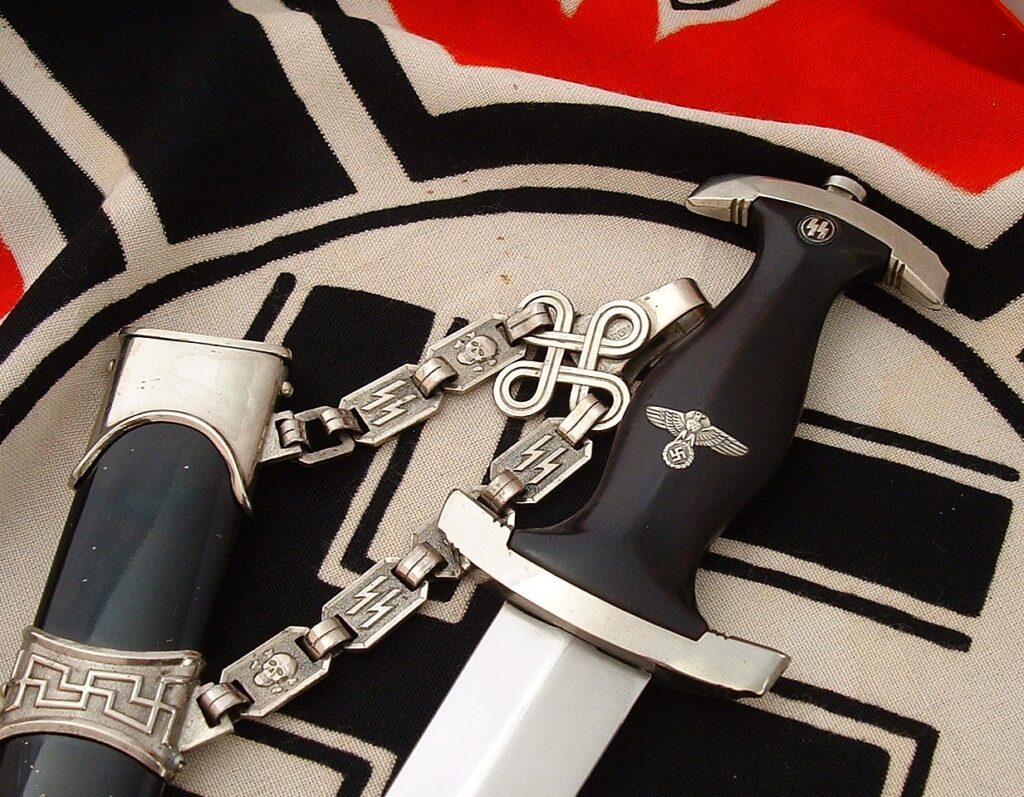
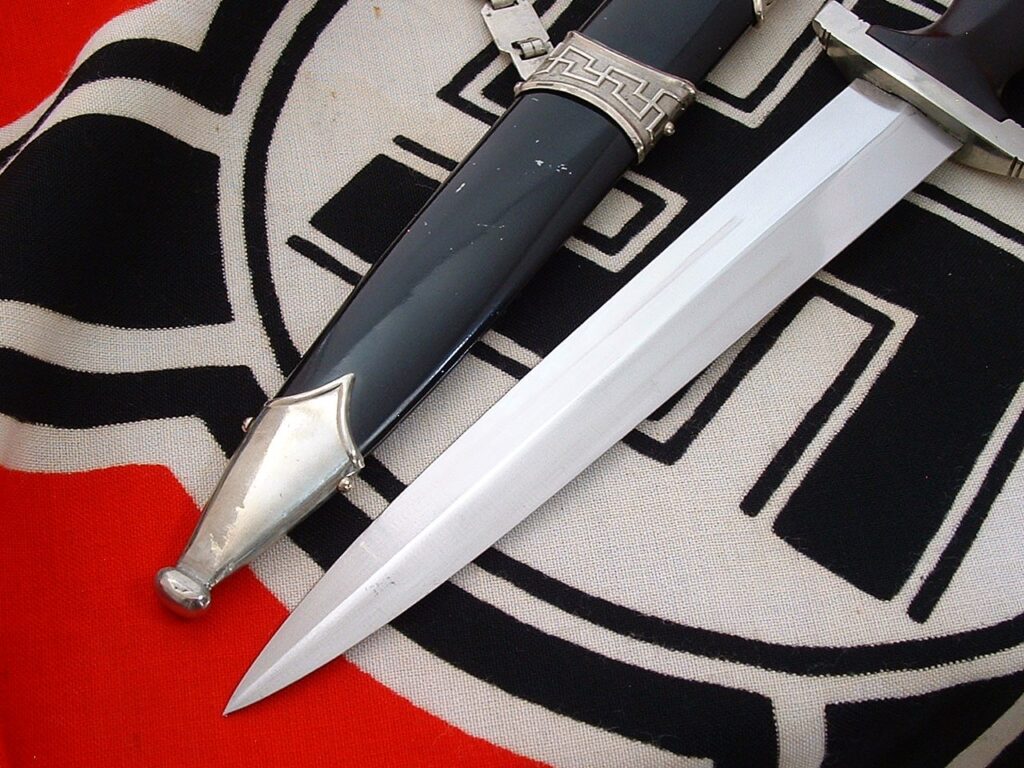
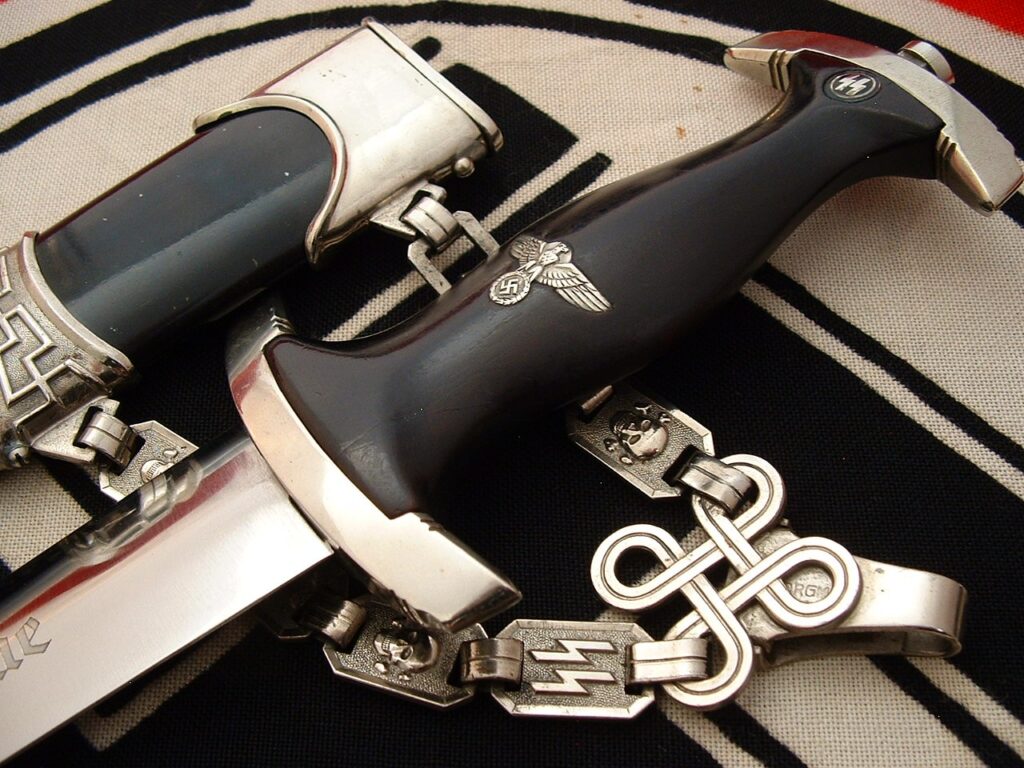
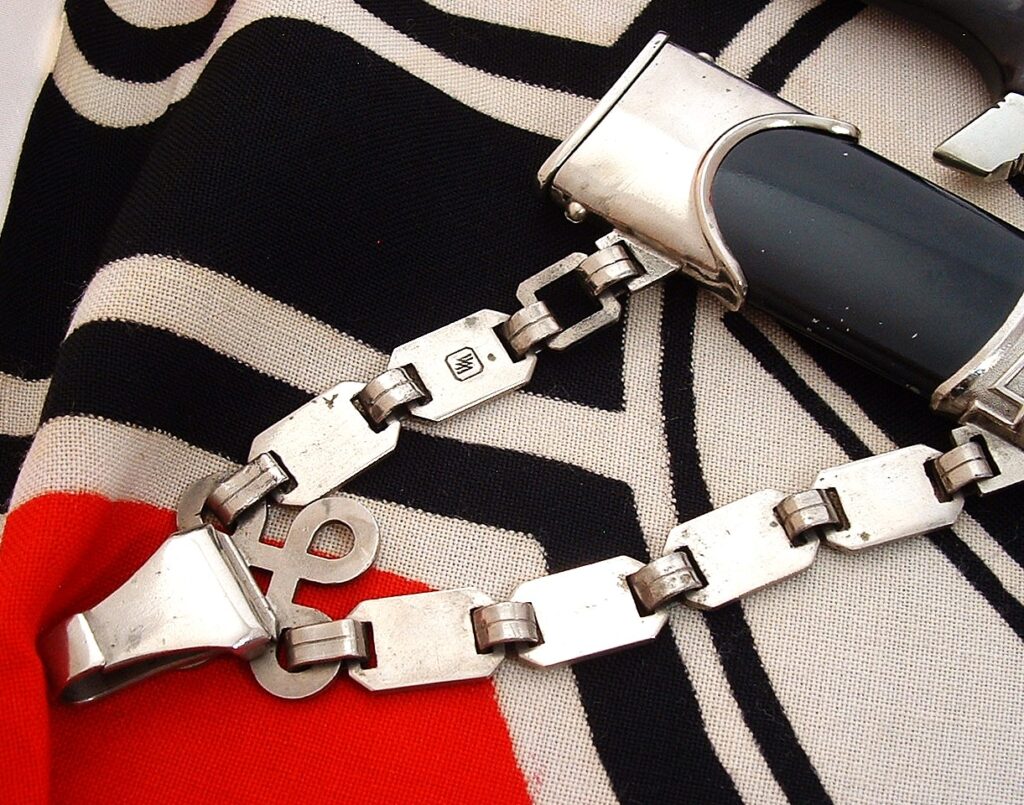
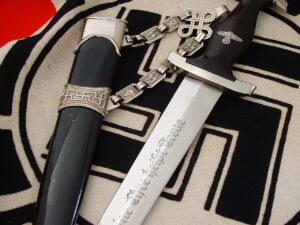
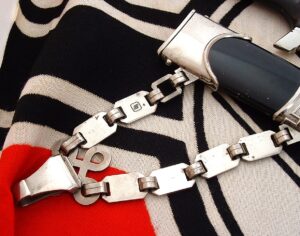
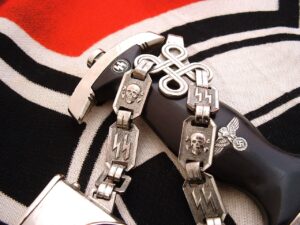
These early Type C’s are without a doubt fairly rare M36 SS chain daggers, seeing a limited production run in the 1937 timeframe. The reason I say that, is that all of the components saved for the actual chain assembly itself are of solid nickel construction. And that includes even the top and bottom fitting of the scabbard, a characteristic seldom encountered. These Type C’s as they are called were initially manufactured in this solid nickel form as shown here. Within a short timeframe, the nickel hilt fittings were no longer available from distributors ( mainly Piel & Adey), and recycled SA Gruppe crossguards were substituted by manufactures in trying to keep production with early quality materials. Same for the scabbards. As mentioned, this one has nickel upper and lower components. I’ve encountered these early C’s with one nickel fitting, and the other plated. This is the progression which we see when the early quality material became restricted to edged weapon manufactures, shortly giving way to all plated metal components. Another characteristic that these early Type C’s have is the thick plating to the chain assembly as shown here with this example.
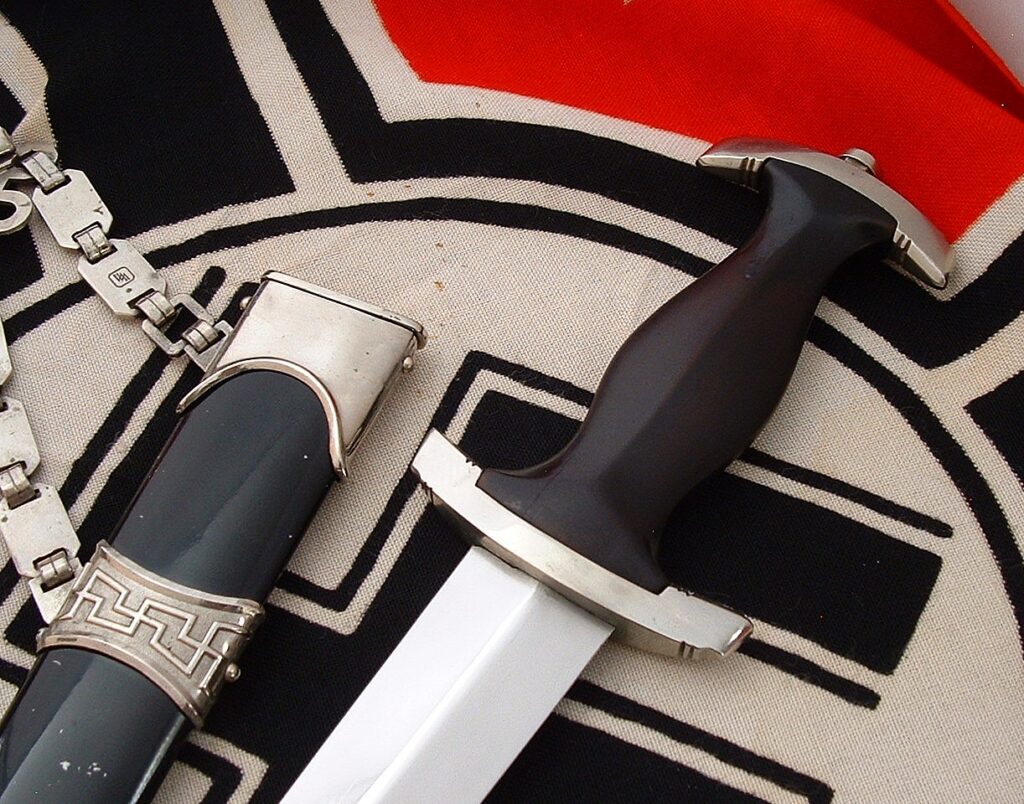
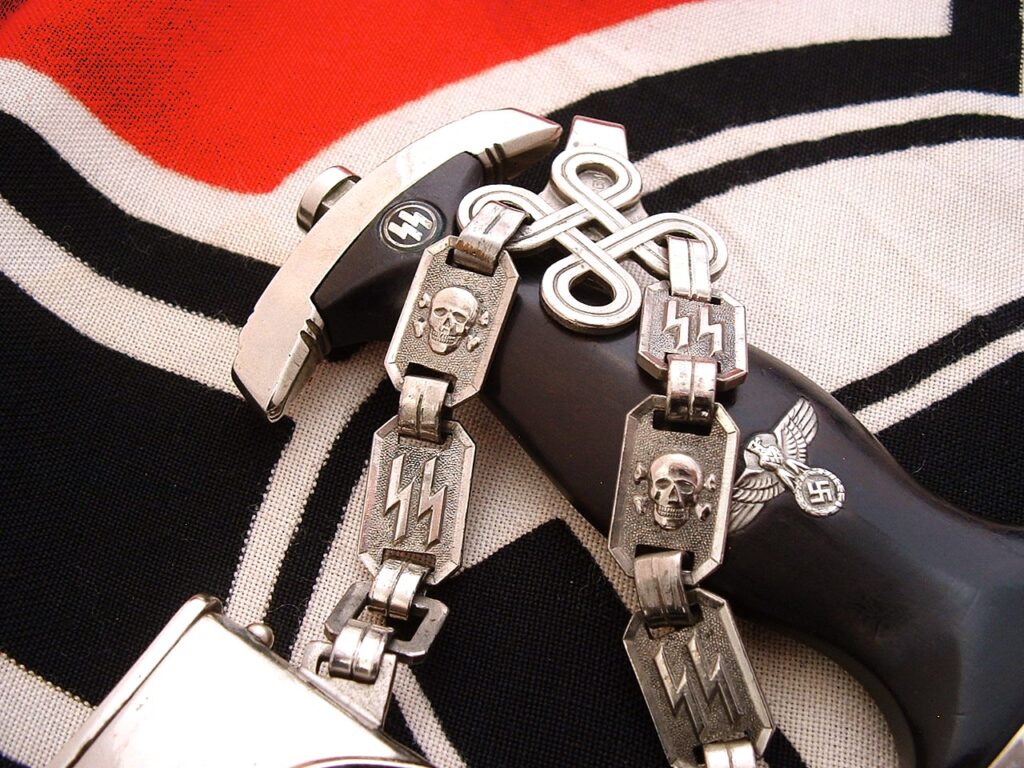
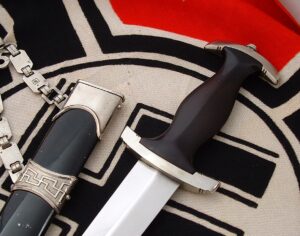
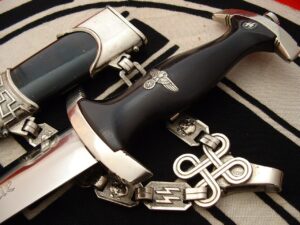
On to the dagger. In lieu of the fact that this grip displays in very fine condition, there is one repair to the lower obverse, which runs around to the reverse. This repair looks to have been accomplished during the period. The reason I say that is because what appears to be a hairline crack and not a dislodged chip, actually has some of the old clear protective period lacquer in places over the thin filled line fracture. Many manufactures used this lacquer process to seal in and protect the black aniline dye which was applied to these handles during the manufacturing process. That aside, the rest of the handle remain in very nice condition, to include the emblems. The crossguards fit the grip and shoulder of the blade to an absolute tee.
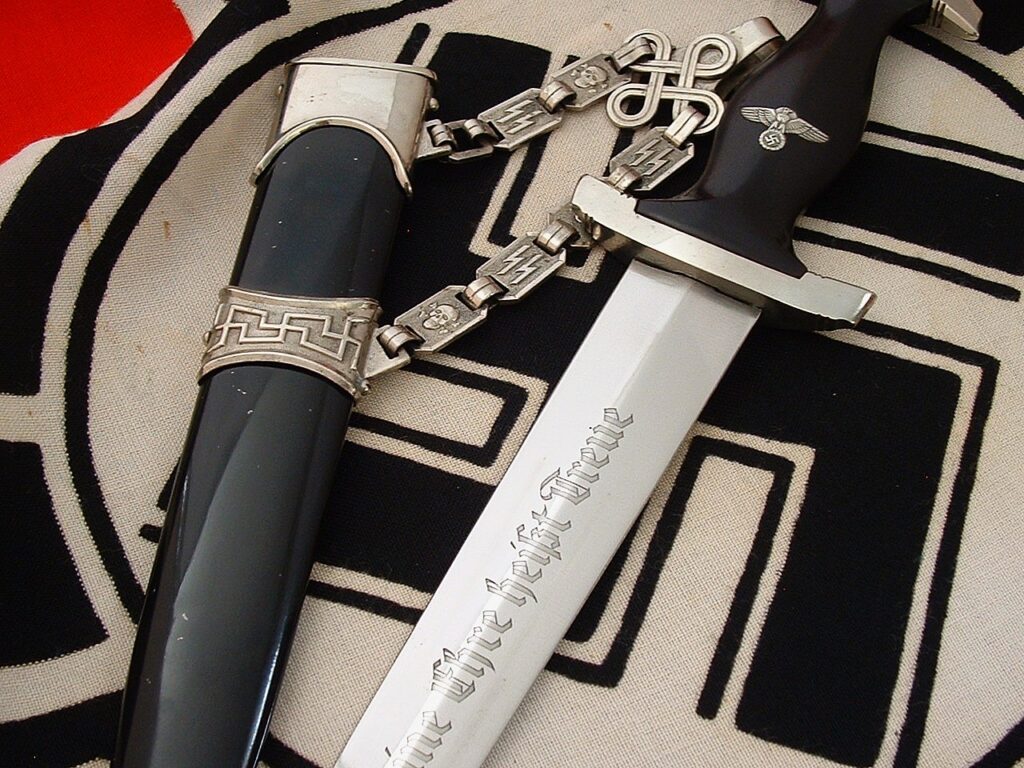
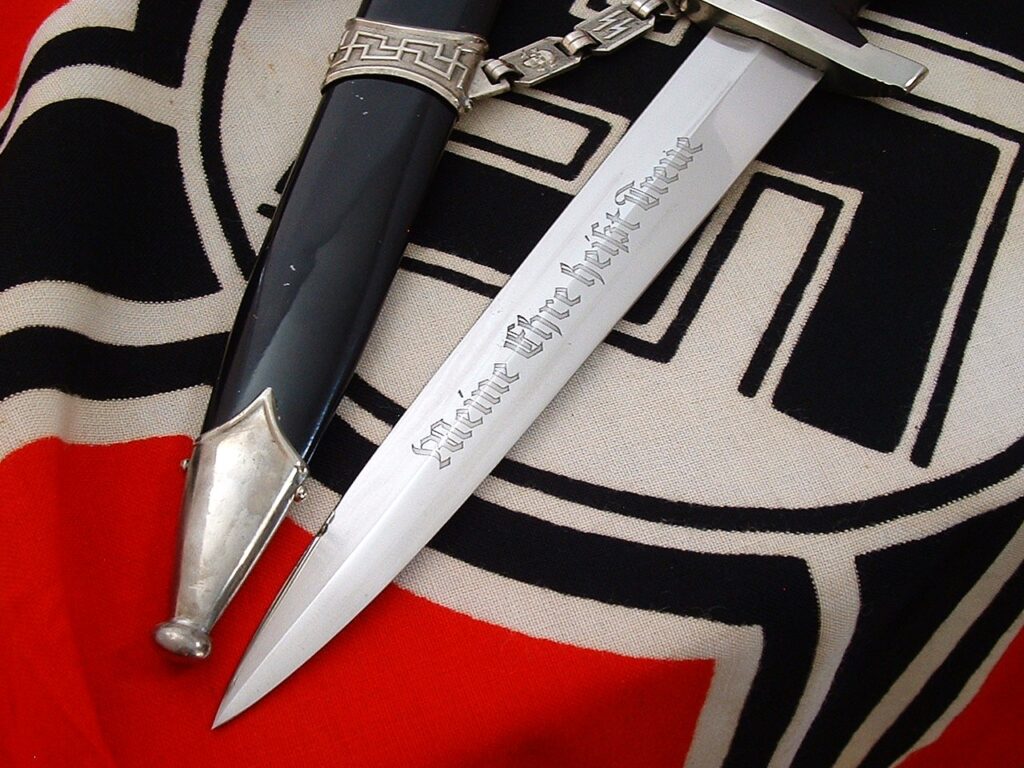
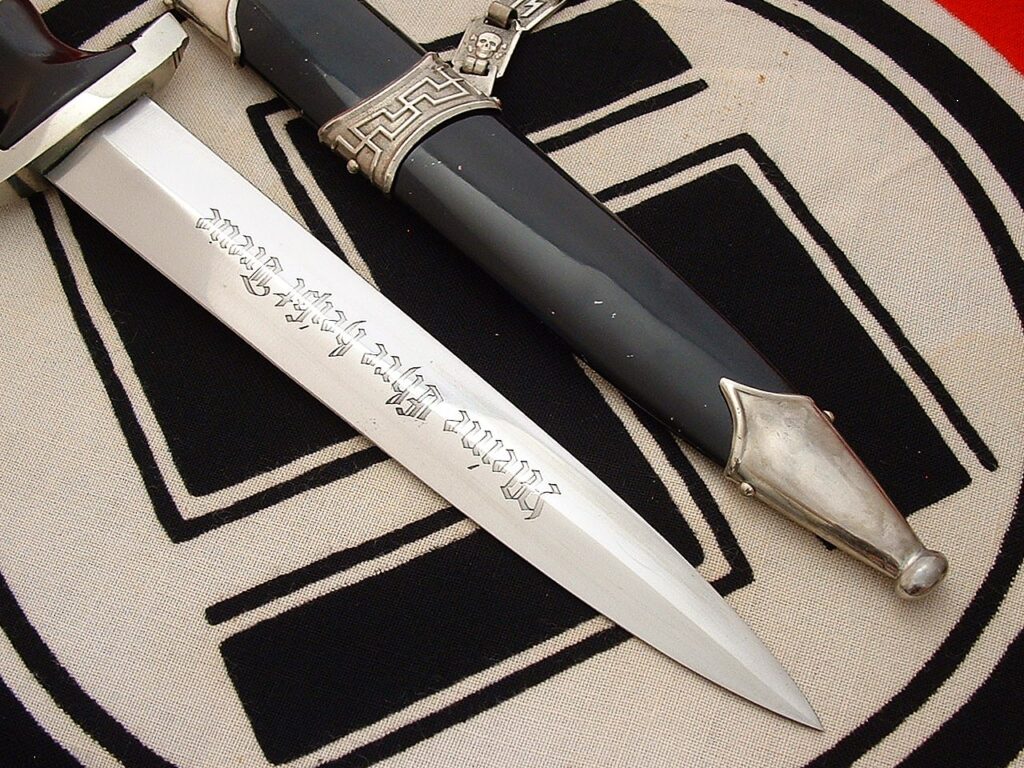
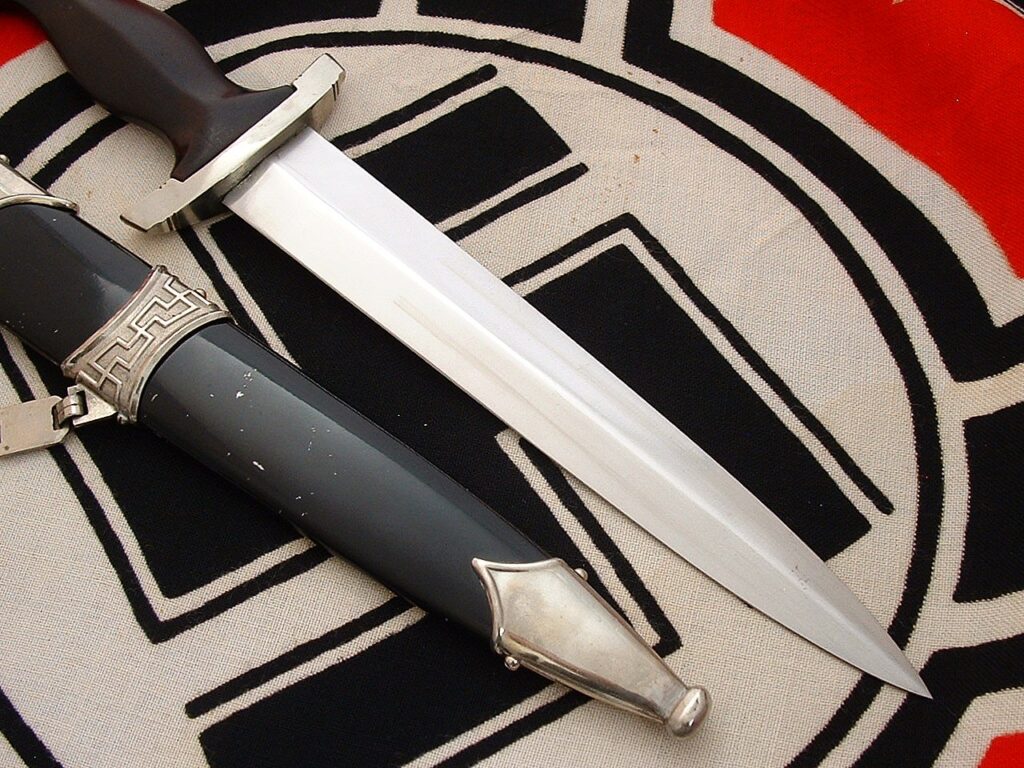
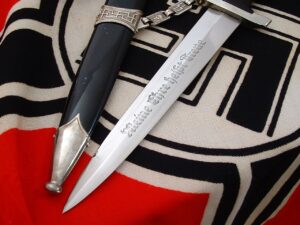
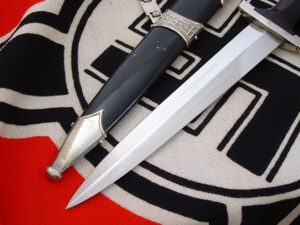
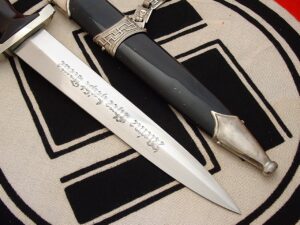
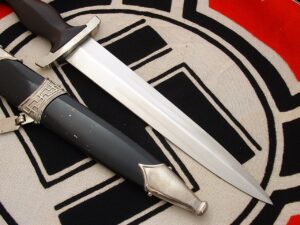
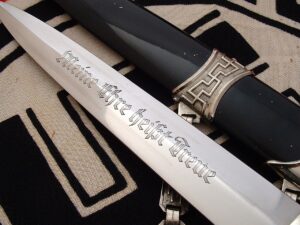
As for the scabbard, it is the painted variety at times associated with these early Type C’s. The shell remains straight, void of any hits, dings, splits, or bends. The period black enamel has endured the test of time in absolutely beautiful condition, rating nearly 98%. As spoke of prior, both upper and lower fitting are nickel, with of course the chain assembly being thick stunning plated die struck steel.
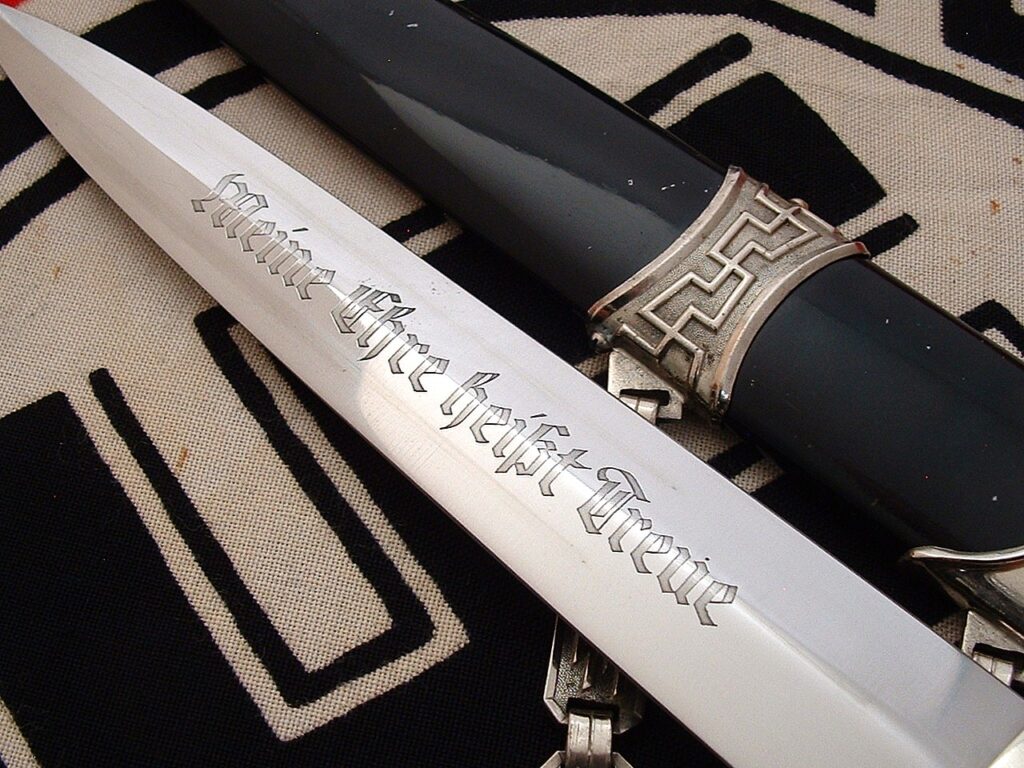
Finally, the blade. It’s an absolute beauty! There is lots of crossgrain and not much as far as age marks to speak of. It totally complements this entire beautiful, edged weapon in stunning fashion!
A great chain to add to any collection! SOLD